The world forge
The first of Claimant's seven milestones is done. Claimant can now generate a whole world, a hex map with coastlines, climate, rivers and named kingdoms, and you can fly over it in your browser. There's no game in it yet. But every season of Claimant will be played on a world like this one, so it had to come first.
Try the world forge. Type any seed, pick a layout and size, and forge.
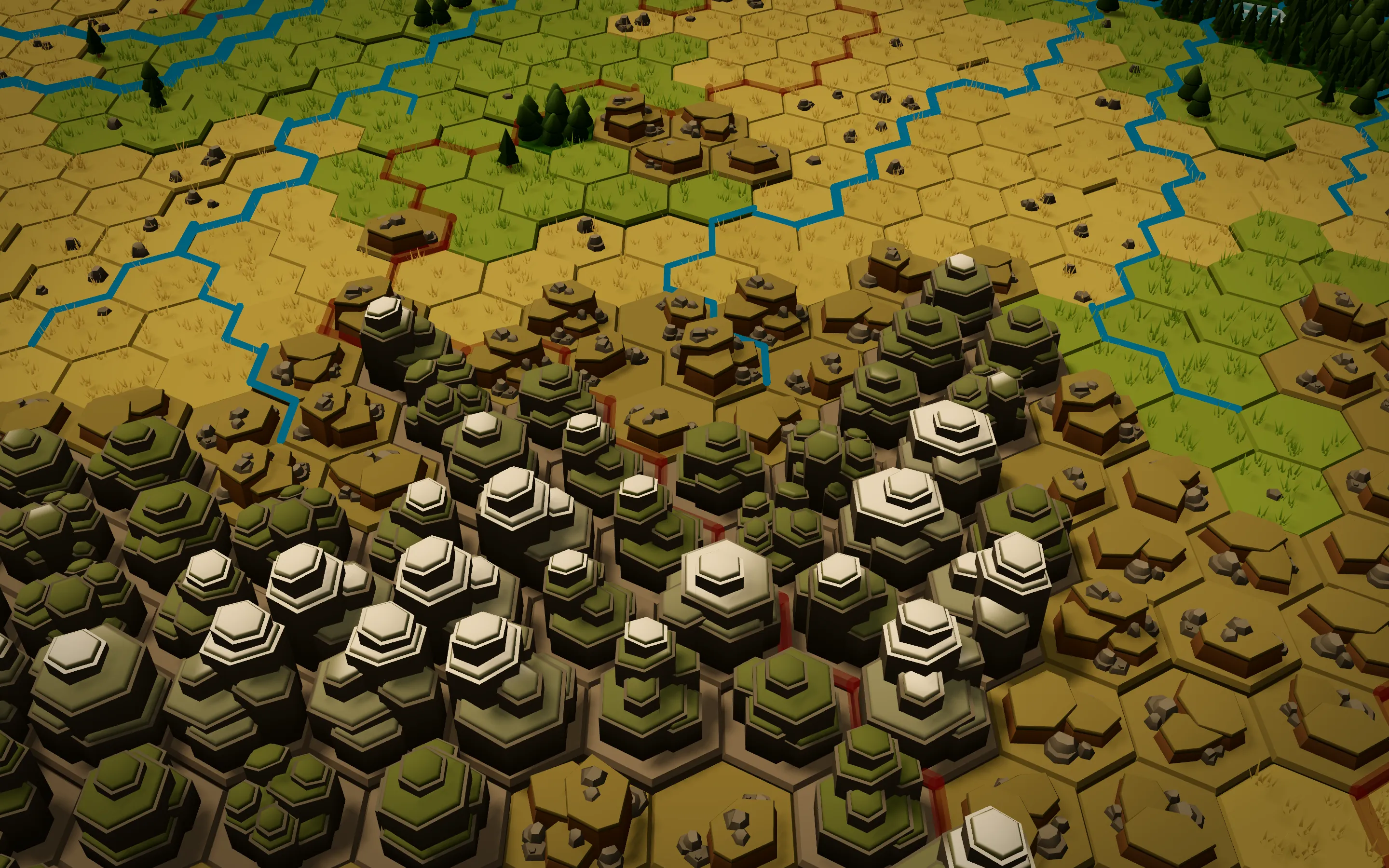
One seed, one world
Each world grows from a seed. The same seed, layout and size always rebuild the same map, down to the last river bend and village name, so a world can be shared as a link. Worlds come in three layouts, one great continent, several continents or an archipelago, and three sizes from about 7,000 to 35,000 hexes.
How a world is made
- Shape. Noise draws the coastlines for the chosen layout.
- Elevation. Layered noise sets each hex's height. The highest become mountains and the lowest become sea.
- Climate. It gets colder toward the north and higher up. Wind carries rain in from the sea and drops it before the mountains, leaving drier land behind them.
- Biomes. Temperature and rainfall pick one of nine land biomes for every hex, or deep sea, coastal water or lake.
- Rivers and lakes. Water runs downhill along hex edges, not through hex centers, so a river can be a border. Low basins fill into lakes.
- Resources and wildlife. Iron, silver, salt and the rest are seeded by biome, and herds of deer, wild horses and bears roam where they belong.
- Regions. Hexes are grouped into provinces, provinces into duchies, and duchies into kingdoms. These are the titles players will fight over.
- Names. Every province, river and mountain range gets a name in one of three naming styles.
- A fairness check. If some starting regions are much poorer than others, the world is thrown out and the next one is tried.
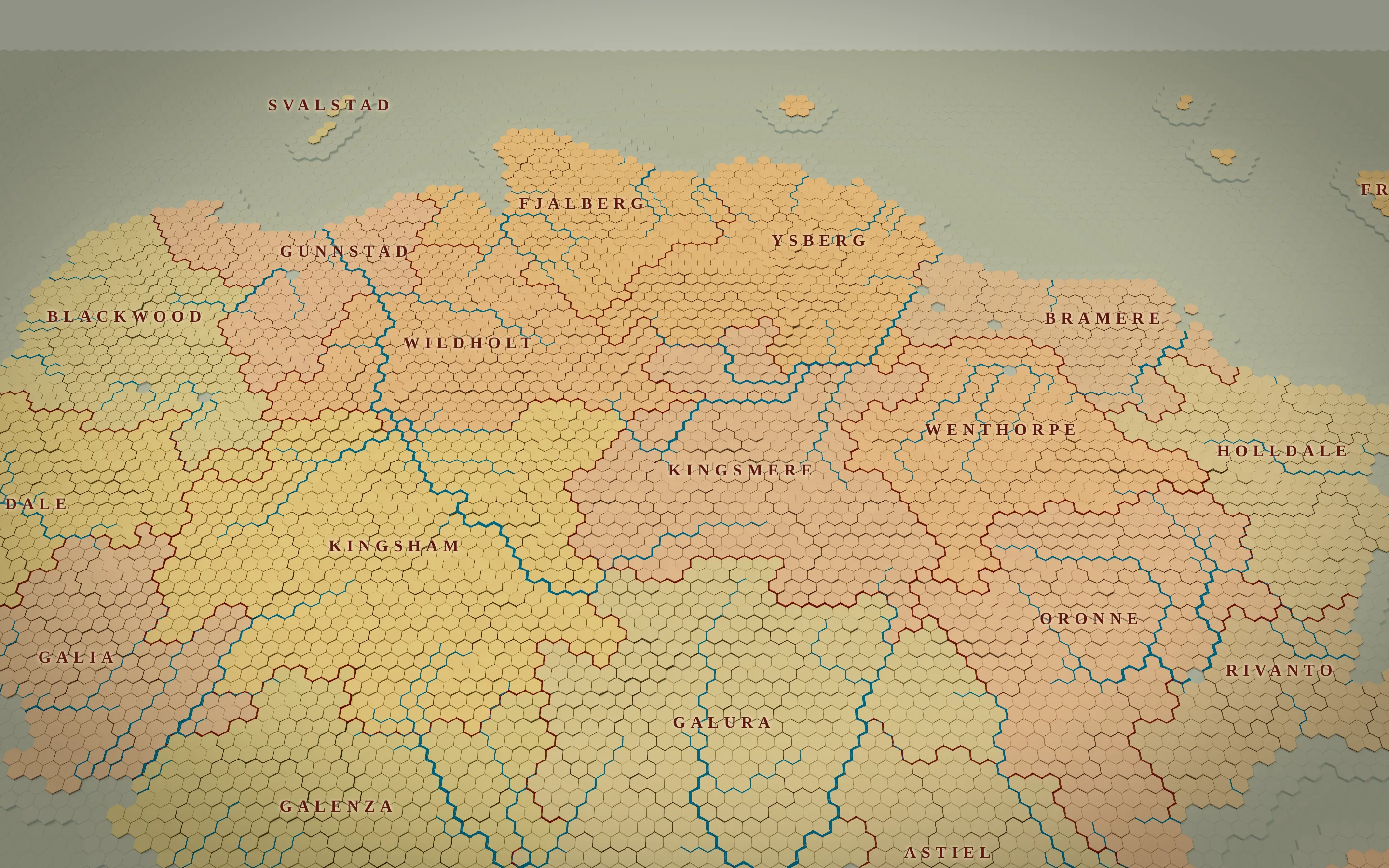
The look
The map is built from the KayKit Medieval Hexagon Pack, recolored to match Claimant's cover art. Every hex is a tile tinted for its biome, then dressed by the rules of its land: forests get tree clusters, the cold north gets dark pines, hills get terraced rock, and mountains get snow on their high ledges when the climate is cold enough. Plains are never left bare. They get grass, scrub or moss.
The water is drawn by a shader that knows how far each point is from shore, so shallows turn turquoise, surf breaks along the coast and the open sea runs deep blue. Clouds drift over the map when you zoom out and cast their shadows on the land below.
A fog of war you'd want to read
Unexplored land isn't a black void. It's an old parchment map with inked coastlines, rivers, contour lines and hand-drawn symbols for mountains and forests. You know roughly what's out there, but not what it holds. Explored land rises out of the paper as the 3D world.
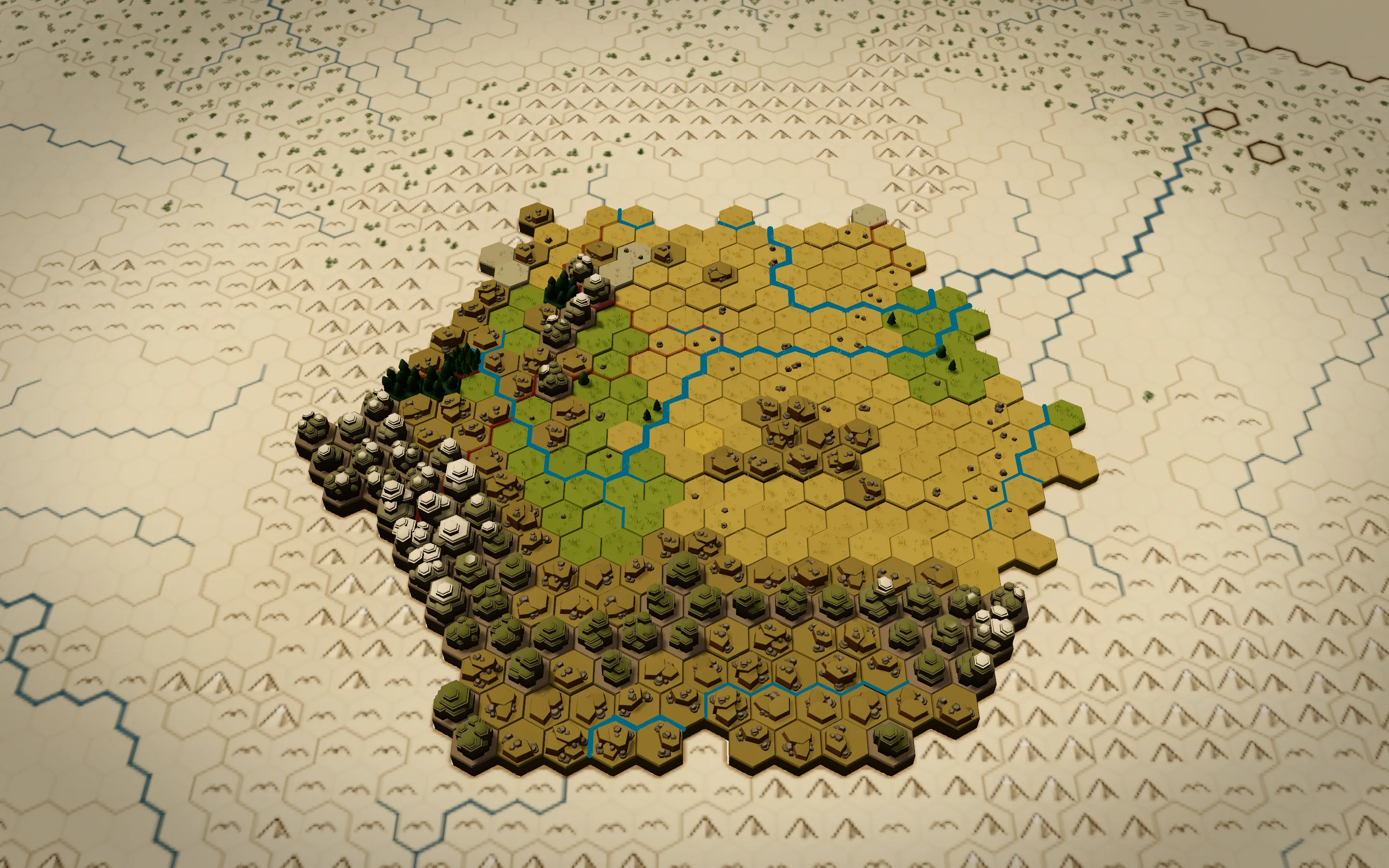
What's next
The next milestone is Survive and settle: your founding band of settlers, camps, claiming land one hex at a time, the first buildings, goods and gold. It ends when one realm can grow from a camp into a town in single-player.